









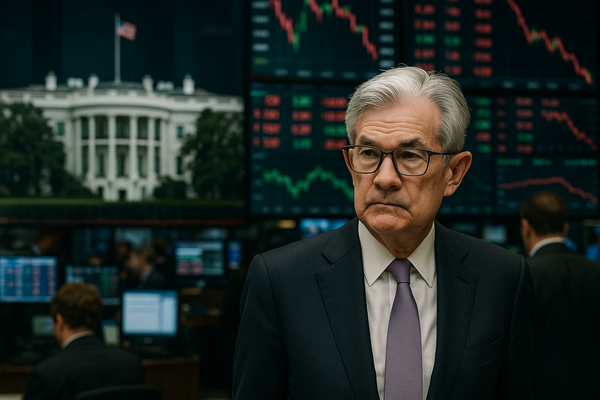
Powell could stay on the Fed board and blunt a White House overhaul. The immediate story is that Federal Reserve Chair Jerome Powell, 72, faces a term end in May but can remain on the Fed Board of Governors for up to two more years. That possibility matters now because the US Department of Justice has threatened a criminal indictment that Powell called a pretext to pressure him on policy. In the short run traders will price uncertainty around appointments and legal actions. In the long run the move could preserve central bank independence and alter rate expectations. The result will reverberate in the US, ripple across Europe and Asia, and weigh on emerging markets that depend on stable US rates.
Timing and political context
Why the immediate calendar will drive price action.
The clock on Powell’s term creates a deadline for market participants. He leaves the chair role in May but can keep his governor seat. That choice matters now because the DOJ action has raised the political heat. Powell described the threatened indictment as a pretext to influence monetary policy. The prospect of him remaining inside the Fed removes one route for a White House to impose rapid leadership change. Markets hate uncertainty. Political pressure on the central bank raises questions about future rate paths. Investors will watch appointment signals, legal developments, and any public comments from the White House and the Fed. Those moves could accelerate volatility in short-dated interest rates and change expectations priced into futures and options. In addition traders will compare the current episode with prior times when political actors challenged central bank independence and note how those episodes fed through to risk assets and yields.
Short-term market implications
How yields, the dollar, and risk assets may react in the next session.
Expect rates to lead the initial market response. If Powell signals intent to stay on the Board, traders may push back on bets for abrupt policy shifts from Washington. That could lower near-term term premium and ease upward pressure on Treasury yields. However if legal or political noise intensifies, safe-haven flows could return and 10-year yields could fall as investors price higher short-term uncertainty. The dollar will respond to changes in US rate expectations. A stabilizing Powell scenario may strengthen the dollar if it reduces perceived political risk. Meanwhile equity markets will sort winners and losers. Financials and rate-sensitive sectors typically react to moves in yields while growth names respond to risk appetite. International markets will not be insulated. European and Asian sovereign yields often follow US trends. Emerging markets, especially those with large external debt or fragile fiscal balances, will remain sensitive to swings in dollar funding and US rates. Traders should watch volume and implied volatility in interest rate products as an early signal of positioning changes.
Long-term consequences for policy and global capital flows
What a Powell hold could mean beyond the next meeting.
If Powell retains a seat on the Board he would still lack the chair title, yet he could influence votes and guard institutional norms. That outcome would slow any attempt at an immediate overhaul of Fed strategy. In the long term this reduces the odds of a sharp pivot in policy doctrine. Central bank independence is a pillar of predictable monetary policy. Preserving that independence tends to lower structural risk premia for global assets. Over time a credible Fed reduces the need for wide risk premia in emerging market borrowers. Conversely sustained political interference would raise borrowing costs and push capital toward perceived safe jurisdictions. Historical episodes of political pressure on central banks have often increased volatility in rates and credit spreads. In addition, sustained uncertainty about leadership can complicate Fed communication, making forward guidance less effective. Global investors will price that uncertainty into asset allocation, affecting cross-border flows into equities, bonds and currencies.
Scenarios for the trading session and what to watch
Key triggers and indicators that could move markets today and tomorrow.
The immediate session will hinge on three drivers. First, any official statement from the Fed clarifying Powell’s intentions or the Board’s plans will be market moving. Second, legal updates or comments from the Department of Justice or the White House will change risk pricing. Third, macro data releases and Treasury supply will interact with the political news to amplify moves in rates and FX. Traders should watch Treasury auction results, short-dated futures, and implied volatility in rate options for signs of repositioning. In equities, breadth and sector leadership will reveal whether risk taking is broad or concentrated. For global markets, watch sovereign bond yields in major European economies and Asian FX for spillover pressure. In addition monitor market commentary and positioning in derivatives that reveal whether investors are scaling back or pressing risk exposure. These reads will matter because they will guide how quickly markets price a stable governance outcome or a prolonged period of political interference.
In closing, the Powell decision is both a policy and political event. It matters now because the DOJ threat and the May term deadline compress the window for action. In the short term markets will react to statements and flow signals. Over time the outcome will influence the credibility of US monetary policy and the price of global risk. Traders, investors, and policymakers will be watching closely for any sign that the Fed can remain independent or that governance changes will drive a sustained rerating of assets.