










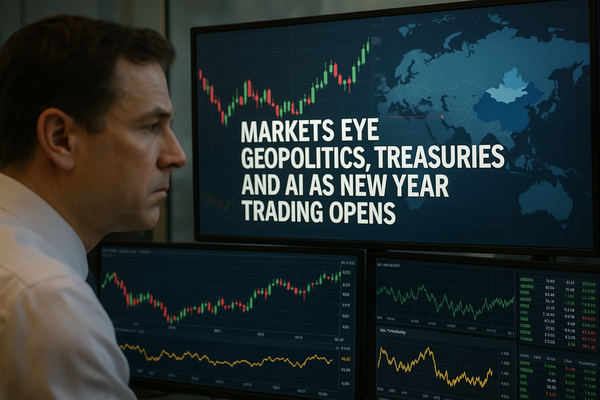
U.S. markets head into trading with geopolitics, Treasury yields and AI driving headlines. A high-profile meeting between the U.S. president and Israeli leadership on Gaza, parallel talks that may narrow a path in Ukraine, and China’s largest war games around Taiwan are all setting risk tone. In the short term traders watch risk sentiment and safe-haven flows. Over the long term the events could recalibrate defence spending, supply chains and regional trade. The U.S., Europe and Asia may react differently, while emerging markets face currency pressure and commodity swings. Recent bond-market strains and a surge in AI investment add extra volatility today. This matters now because multiple market-moving stories have converged ahead of the session.
Geopolitics takes center stage
Trump-Netanyahu meeting, Ukraine talks and China’s drills set the risk backdrop
Global markets open with geopolitics front and center. A summit at Mar-a-Lago between the U.S. president and Israel’s prime minister puts a stalled Gaza ceasefire back on traders’ screens. That meeting matters now because it can alter regional risk premiums within hours. At the same time, signals that talks between the U.S. and Ukraine are moving closer to a possible agreement on the conflict will keep European markets attentive to defence chain orders and energy routes. China has launched extensive military drills around Taiwan that test supply corridor resilience. The drills are prompting heightened caution across Asian bourses and shipping routes. In the short run, risk-off moves typically lift Treasuries and the dollar. Over months, any sustained change to regional stability could reshape defence procurement, insurance costs for trade and the allocation of capital between safe havens and risk assets.
Fixed income and tariff messaging
30-year Treasuries remain a focal point after this year’s market strains
The 30-year U.S. Treasury stood out in the past year and it stays central to today’s session. Its price stability through 2025 drew attention from investors and commentators alike. Earlier episodes of tariff-driven market stress pushed the bond market to push back against policy moves. Since then, policymakers have tailored messaging to avoid another bout of volatility. That truce may not be permanent and investors are watching both headline policy language and real economic data for clues. Higher yields would weigh on long-duration assets, while a renewed rush into Treasuries could tighten term premiums and pressure bank net interest margins. Large financial institutions that trade these markets, including JPMorgan (NYSE:JPM), will be watching liquidity and hedging flows closely. European sovereigns and emerging-market debt markets will track any U.S. yield moves because spillovers can affect funding costs globally.
AI boom and tech pressure
Demand for AI chips lifts megacaps, while regulatory and safety concerns add scrutiny
Artificial Intelligence remains the dominant structural story for equities. Demand for chipmakers and cloud providers continues to accelerate capital allocation into a narrow group of technology companies. Nvidia (NASDAQ:NVDA) stays a bellwether for hardware appetite. Large software and social media platforms such as META (NASDAQ:META) and cloud players including Amazon (NASDAQ:AMZN) remain central to implementation of new AI models. That concentration has helped overall market gains this year, but it also invites regulatory and reputational risk. Reports of AI-enabled fraud schemes and a high-profile death linked to a chatbot have increased scrutiny from regulators and corporate boards. These incidents can slow product rollouts and push firms to revise compliance protocols. For equity traders this means monitoring earnings commentary for changes in AI spending plans and any regulatory developments that could affect revenue recognition or customer growth.
Space-sector moves and IPO implications
Chinese private rocket ambitions meet U.S. rival IPO talk, adding speculative interest
Capital markets are watching aerospace names because corporate actions and listings can redirect investor appetite. China’s Landspace is preparing to go public as it seeks funds for launch development. At the same time U.S. heavyweight SpaceX has signalled renewed interest in an initial public offering. The potential for more public listings in the orbital and satellite supply chain attracts both retail and institutional interest. A successful listing by either firm would add a new category to growth equity flows. However, the space sector remains capital intensive and dependent on government contracts and launch cadence. Investors will gauge demand for new shares against broader market liquidity and the current mood toward speculative growth stocks.
Markets also carry domestic consumer threads into the session. Retail-facing sectors lagged in a strong year for indices. Rising prices and a softer labour market dragged on spending patterns. Some strategists note that AI could compress jobs at higher income levels, which may eventually filter through to discretionary consumption. For today’s session, data releases, Treasury yield moves and any fresh geopolitical headlines will likely determine which sectors lead and which lag.
Traders in New York will watch headline news and bond auctions. European desks will balance local economic reports with risk sentiment from Washington and Beijing. Asian markets will track the pace of military drills and any commentary from regional policymakers. Emerging-market currencies may react first to swings in the dollar and U.S. yields. In sum, the session opens with several distinct drivers in play. Each has the potential to produce intraday volatility and to reshape positioning over the coming weeks.