








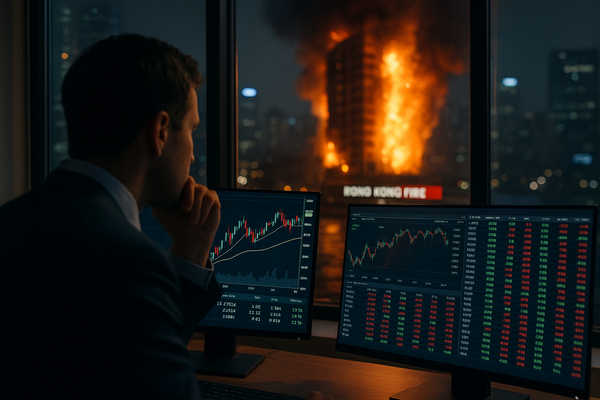
Reuters photo from Hong Kong fire becomes global symbol and sets market focus. A Reuters photographer captured a distraught 71 year old retiree after the Wang Fuk Court blaze in Tai Po, Hong Kong. The image circulated widely a week after the tragedy. At least 156 people were killed and about 30 remain listed as missing. The photo matters now because it concentrates attention on public safety, local politics and social sentiment just as markets reopen in the region. Short term it can affect sentiment in Hong Kong and nearby Asian markets. Longer term it may pressure local policy and regulatory scrutiny that investors will track globally.
Media coverage and market mood
How intense reporting shapes investor attention in the short run
The photograph has become the defining visual of the Wang Fuk Court fire. That clarity of imagery can drive public debate and political response. Local officials face questions about building safety and emergency response. Meanwhile global news desks highlight the human toll. That combination can tighten investor focus on Hong Kong where any shift in public confidence can alter risk appetite.
Traders and analysts will watch headlines closely as news flow can set the tone at the open. Sustained media attention often leads to heightened trading in names tied to property, insurers and infrastructure. Coverage concentrated on one clear image tends to amplify sentiment more quickly than routine reports. As markets start trading, the speed of information will matter for volume and short term volatility.
Regional trading implications
What Asian markets may reflect and how global markets could respond
Hong Kong equities are likely to draw the most direct attention. Investors will gauge whether the story prompts policy statements or emergency measures that could affect housing and municipal spending. Nearby Asian bourses may move in sympathy as regional investors reassess exposure to Hong Kong centric risk.
European and US markets open later with headlines already set. Overnight sentiment can act as a spillover channel. For example, a heavy news cycle in Hong Kong may encourage cautious positioning among global managers ahead of US opening. That can influence flows between risk assets and havens such as government bonds or major currencies during the day. Market participants will be attentive to liquidity and the pace of headline updates as these factors shape intraday moves.
Sector focus for the session
Property, insurers, contractors and local services will face scrutiny
Certain sectors will attract immediate interest. Property and real estate related names may experience sharper attention because the fire raises questions about building condition and management. Insurance companies could also be in focus as analysts and traders consider the scale of claims that follow large loss events. Construction and maintenance firms will see elevated coverage if investigations highlight structural or compliance issues.
Retail and local services can feel effects through changes in foot traffic or consumer confidence in affected neighborhoods. Media and communications companies also play a role because images and narrative control how fast sentiment spreads. Investors will follow sector specific commentary from regulators and business groups for detail on exposure and potential cost implications. The session will likely concentrate on reports that clarify the scope of damages and the emerging official response.
Key things to watch during the trading day
Headlines, official statements and liquidity conditions that could influence trade flows
First, updates to the death toll and the missing persons list will remain central. Any major revision will reverberate through headlines and could alter market mood. Second, statements by Hong Kong authorities about investigations, building inspections or support measures will be critical. Clear policy actions or promised reforms usually shape investor judgment on medium term risks.
Third, local media and international outlets will determine how broadly the image and narrative travel. Rapid global coverage can prompt cross border repositioning by institutional funds. Fourth, watch market liquidity in Hong Kong and regional exchanges. News driven spikes in volume can widen bid ask spreads and amplify price moves. Finally, commentary from banks and analysts published during the session that assess sector exposure will help market participants form a sharper view without offering investment advice.
Possible scenarios and what they mean for traders
Range of outcomes and the signals to monitor for market interpretation
One scenario is concentrated local fallout where policy makers move quickly to shore up confidence with targeted measures. That tends to calm markets as clarity arrives. Another scenario is prolonged public debate and inquiry that keeps headlines alive. That carries a higher probability of extended sentiment effects on local assets. A third scenario is a rapid news cycle that escalates globally but produces limited policy change. In that case volatility may spike early then fade as traders focus on fundamentals elsewhere.
Across these outcomes the same signals will matter most. Investors will read official briefings for substance, watch media tone for persistence of the story, and monitor trading volumes for signs of conviction. For the session ahead, market participants will use those signals to adjust exposure and manage intraday risk. The focus will remain on information flow rather than on making concrete forecasts.
Overall, the image from the Wang Fuk Court fire has moved beyond a single moment of sorrow to become a central point of attention as markets open. Observers will track how facts, official responses and media coverage evolve through the day. That evolving information will influence sentiment and trading dynamics across Hong Kong and the wider region, with knock on effects felt in global markets as they respond to the news cycle.