







Apple’s Google Gemini tie-up is reshaping Siri and accelerating Apple Inc.’s (NASDAQ:AAPL) AI roadmap, and it matters now because the pact arrives as rivals push cheaper AI infrastructure and regulators press big-tech scrutiny. Short term, the deal lifts service monetization prospects and fuels options and insider activity. Long term, it signals a platform play that could deepen Apple’s services moat in the US, Europe, and Asia while forcing chip and cloud partners to scale. Compared with past product cycles, this is a faster pivot to cloud AI partnerships than Apple has made before.
Market Pulse Check
Investors are rotating within tech, rewarding AI infrastructure winners while penalizing companies with legal overhangs or uneven execution. Demand drove NVIDIA Corporation (NASDAQ:NVDA) and related semiconductor ETFs higher this week, even as Chinese customs friction clipped some hardware flows. Meanwhile, Apple Inc. (NASDAQ:AAPL) showed price weakness and heightened options activity, and Oracle Corporation (NYSE:ORCL) faces bondholder scrutiny despite cloud deals.
ETF concentration is a live concern. Vanguard Mega Cap Index Fund ETF Shares (NYSEARCA:MGC) and SPDR S&P 500 ETF Trust (NYSEARCA:SPY) highlight how a handful of mega-caps now sway flows. That is reshaping portfolio positioning across the US and into Europe and emerging markets, where index tracking and local tech exposure differ.
Analyst Convictions
Wall Street shows split conviction across the group. Evercore reiterated an Outperform on Apple (NASDAQ:AAPL) and set a $330 target, citing monetization upside from the Gemini tie-up. At the same time, Jefferies raised a price target on NVIDIA (NASDAQ:NVDA) to $275, underscoring strong AI model demand. Wells Fargo upgraded Broadcom Inc. (NASDAQ:AVGO) to Overweight with a $430 target, pointing to AI inference and networking strength. KeyBanc moved AMD (NASDAQ:AMD) higher on hyperscaler demand.
Valuation arguments vary. Some analysts can reconcile premium multiples because of durable AI tailwinds and cloud backlog. Others warn of concentration risk when three megacaps dominate index weights. The divergence between reiterations and fresh upgrades is widening trading ranges more than earnings beats alone.
Risk Events vs. Expansion
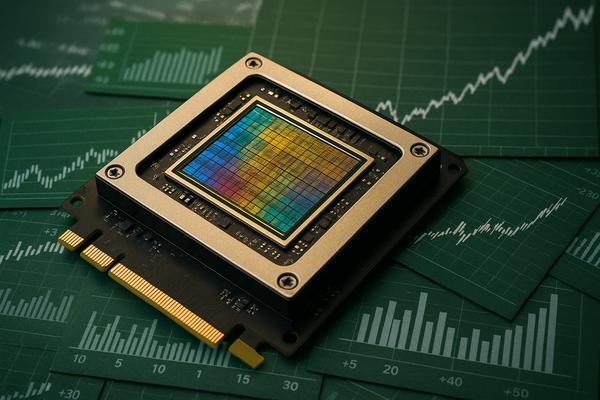
Regulatory and operational events are colliding with big expansion plans. China’s temporary blocking of NVIDIA’s (NASDAQ:NVDA) H200 shipments highlights export and customs risk that can interrupt near-term revenue. At the same time, Taiwan Semiconductor Manufacturing Co. (NYSE:TSM) is planning multibillion-dollar capex that will support chipmakers over the next several years, reducing long-term supply constraints for AI accelerators.
Oracle (NYSE:ORCL) illustrates the tension between expansion and legal risk: the company is expanding cloud capacity and striking OpenAI deals while facing a bondholder suit over disclosure tied to AI spending. Broadcom (NASDAQ:AVGO) issued $4.5 billion in notes to fund growth even as analysts elevate expectations — a funding choice that increases leverage but accelerates product road maps for Wi‑Fi 8 and AI inference chips.
Leadership and Fundamentals
Leadership moves and insider behavior are adding texture. Apple (NASDAQ:AAPL) insiders sold roughly US$23 million of shares over the past year, a signal investors note as the company pivots services and AI partnerships. Billionaire reallocations — notably Stanley Druckenmiller trimming Broadcom (NASDAQ:AVGO) in favor of other AI names — show selective institutional repositioning.
Fundamentals differ from price action in several cases. Microsoft Corporation (NASDAQ:MSFT) posts robust cloud and AI revenue trajectories but has seen periodic short-term pullbacks. Intel Corporation (NASDAQ:INTC) is extending a comeback story tied to foundry hopes even as sentiment only recently improved. Those gaps between fundamentals and market moves create tactical opportunities for active managers but also raise questions about conviction breadth.
Investor Sentiment
Institutional and retail behavior is diverging. Institutions are reweighting portfolios toward AI infrastructure names and pursuing larger-cap exposure through concentrated ETFs like MGC (NYSEARCA:MGC) and SMH (NYSEARCA:SMH). Retail traders show higher option volume in Apple (NASDAQ:AAPL) and NVIDIA (NASDAQ:NVDA), amplifying intraday swings.
Valuation disconnects are notable: firms such as Oracle (NYSE:ORCL) and Palantir Technologies (NYSE:PLTR) receive analyst support despite litigation or execution concerns. On the flip side, stocks with improving fundamentals—Intel (NASDAQ:INTC) and AMD (NASDAQ:AMD)—sometimes trade as if risks remain larger than they are, reflecting a market that prices both macro uncertainty and idiosyncratic catalysts.
Investor Signals Ahead
Contrast is the dominant theme: upgrades and price targets point to conviction for AI leaders, while legal rulings and export controls create real near-term friction. Investors should parse earnings and regulatory developments for confirmation rather than assumption. In the coming month, watch how supply-side moves (TSMC capex, Broadcom product ramps) interact with demand signals (data-center commitments, OpenAI spending) and how that interplay affects flows between NVDA (NASDAQ:NVDA), AAPL (NASDAQ:AAPL), AVGO (NASDAQ:AVGO), and other market leaders.
These signals will not forecast returns, but they will help distinguish where institutional conviction is concentrated and where market pricing still discounts meaningful risk. Expect leadership to be reshuffled as headlines around shipments, legal rulings, and analyst revisions land.