










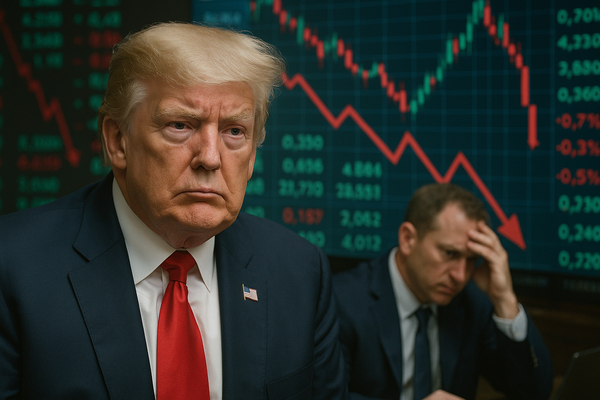
Trump’s retribution campaign is reshaping political risk for the upcoming trading session. A new investigation found at least 470 people, organizations and institutions named as targets. The campaign uses orders, investigations, firings and funding decisions to punish perceived opponents. That creates immediate market anxiety in the United States and feeds into European and Asian trading through currency and safe haven flows. In the short term traders may price increased volatility and sector rotation. Over the long term markets will weigh the persistence of targeted actions and their effect on institutions, regulatory certainty and fiscal policy.
Political targeting and market mood
Why investors are watching the scope and speed of the campaign
The investigation identified at least 470 targets. High profile names include Senator Mark Kelly, former FBI director James Comey and New York Attorney General Letitia James. Roughly half the targets were named individually. The rest were swept up in broader purges. That scale matters for traders because targeted moves can change incentives across government and business. Orders and firings can alter agency leadership quickly. Investigations and funding decisions can change policy execution and contract flows over weeks.
Markets dislike uncertainty. Short term, news that an agency head or investigator faces removal can prompt risk off reactions. Equities that are sensitive to government contracting and regulation may see wider price swings. Bond markets can react to any suggestion that fiscal or enforcement priorities will change. Those moves are likely to play out in US trading first and then in European and Asian sessions as risk sentiment transmits globally through currencies and yields.
Transmission channels: how orders, probes and funding moves reach price action
The mechanisms the investigation highlights and what they mean for asset classes
The campaign relies on four primary mechanisms. It uses executive orders to set new priorities. It opens investigations that can create legal uncertainty for firms and officials. It pursues firings that change institutional leadership. It shifts funding to reward or punish institutions. Each mechanism has a distinct market channel.
Executive orders can alter regulatory direction almost overnight and that can change sector profitability. Investigations raise the risk of fines or operational disruption for affected entities and can increase legal sector activity. Firings can interrupt program continuity and raise concerns about institutional capacity. Funding decisions can alter spending at the federal and state level and change cash flows to contractors and service providers. Traders will parse headlines for which mechanisms are being used and where, and that parsing will shape intraday moves in equities, fixed income and currencies.
Global spillovers and comparative context
How Europe, Asia and emerging markets may price in US political actions
US political actions have a global footprint. In the near term, risk aversion in US trading can lift the dollar and US Treasury yields. That in turn pressures currencies and capital flows into Europe, Asia and emerging markets. Regional equity markets may lag the US reaction by hours and then reflect risk sentiment through lower beta sectors. Emerging market assets that rely on external financing are particularly sensitive to rapid moves in the dollar and US yields.
Historically, large scale political purges or broad targeting of officials are rare in modern US practice. The investigation’s count of at least 470 targets is notable for its breadth. That breadth raises questions about persistence. If targeting is episodic and short lived, market responses may be transitory. If it becomes a sustained program, then investors will reassess political risk premia across multiple markets and asset classes. Traders will compare current headlines to past episodes when institutional uncertainty led to multiweek volatility spikes across global markets.
What traders will watch in today’s session
Key headlines and market signals that will influence trading flows
News flow will drive much of the session. Traders will track new names added to the target list. They will watch for announcements that use orders, opening of investigations, removal of officials or changes in funding. Any confirmation that a major agency is being restructured or defunded will prompt a reassessment of regulatory and budget pathways. Market participants will also monitor domestic liquidity and Treasury bill moves as a gauge of safe haven demand.
Beyond headlines, price action will reveal how traders interpret risk. A widening in credit spreads suggests pocketed concern about corporate exposure to political decisions. Sharp dollar strength and lower global equity indices point to broader risk off conditions. If markets instead price the news with limited moves, that will signal confidence that institutions can absorb disruption. Over the course of the trading day, volume and cross asset correlations will help clarify whether the reaction is short lived or the start of a longer repricing of political risk.
The investigation behind the reporting found that many targets were swept up in broad actions while others were singled out individually. That dual pattern creates both discrete shock risks and systemic uncertainty. For the upcoming session, markets will treat both as information to be priced. Traders will focus on which mechanism is being used and whether actions indicate a temporary campaign or a sustained change in how government interacts with critics. The answers will shape volatility and capital flows across the US and global trading day.