








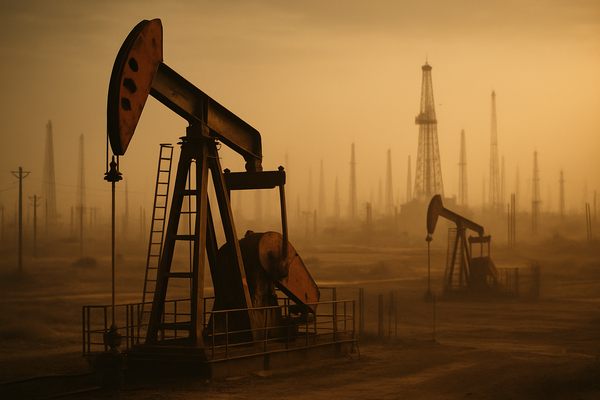
Exxon Mobil (NYSE:XOM) has approached the Iraqi oil ministry to express interest in buying Lukoil’s (MOEX:LKOH) majority stake in the giant West Qurna 2 oilfield. The move matters now because it could reallocate a major producing asset from a Russian operator to a U.S. supermajor, with near-term market signal for oil investors and longer term implications for Iraq’s production plans and foreign investment dynamics across Europe, Asia and emerging markets.
What the potential deal is and why it matters now
Reports show Exxon has opened talks with Iraq over the sale of Lukoil’s majority holding in West Qurna 2. The field is one of Iraq’s largest, and any change of operator can shift development timelines, capital allocation and operator strategy. In the short term markets will watch for statements from Baghdad, contract terms and any interim production guidance. Over the longer term a transfer to a U.S. major could accelerate investment in technology and development, and alter export patterns to key buyers in Asia and Europe.
The timing is critical. Oil markets already price in a range of supply and demand variables. News that a global major is pursuing a large Iraqi asset can drive re-evaluation of regional supply risk premiums. For Iraq, approvals and negotiation speed will determine whether the move simply reshuffles ownership or becomes a catalyst for new drilling, infrastructure spending and production growth.
Immediate market reactions and price implications
Energy investors typically respond quickly to signs of consolidation or operator change in major fields. Statements of interest by Exxon could support sentiment for U.S. and European oil stocks, while traders may reprice short-term risk in Brent and regional benchmarks. Any indication that production might be curtailed for transition or legal review would lift near-term volatility.
That said, the technical mechanics of asset transfers can take months. Contracts, local content rules and fiscal terms must be reconciled, and the Iraqi oil ministry will play the lead role. Until approvals are clear, markets will treat the development as a potential driver rather than a fait accompli. The prospect of a smooth handover would reduce perceived geopolitical concentration of Russian participation in Iraq, and the market would likely reward clarity with reduced risk premia for Middle East supply.
Strategic and regulatory hurdles in Baghdad and beyond
Any sale of a majority interest in West Qurna 2 requires Iraqi government approval and a clear pathway for transfer of operator responsibilities. Local politics, ministry priorities and contract clauses will shape outcomes. Investors should watch for announcements about environmental, social and governance commitments that may be tied to a new operator, and for details on how service contracts or production sharing arrangements would be amended.
Geopolitical factors also matter. The identities of buyers and sellers can influence export relationships with major consuming regions. An Exxon-led operation would likely deepen ties with U.S. corporate governance and financing norms, while a continued Russian presence would sustain existing trade channels. Regulatory clarity from Baghdad will determine whether international capital returns to large Iraqi projects more confidently.
Cross-market context: corporate deals and consumer signals
This potential oil deal arrives alongside notable corporate activity reported in the same news round. Streaming and media consolidation have drawn attention after a mostly cash offer from Netflix (NASDAQ:NFLX) for Warner Bros Discovery (NASDAQ:WBD) was reported. That deal would reshape content competition and investor focus in media equities. In technology, Apple (NASDAQ:AAPL) resisted an Indian order to preload a state-run app, and Amazon (NASDAQ:AMZN) cut seller fees in Europe to respond to competition from low-cost platforms. Such moves affect broader equity market sentiment, and they can influence risk appetite for cyclical sectors including energy.
Auto demand signals also matter for oil. Tesla’s (NASDAQ:TSLA) China-made EV sales rose in November, a data point investors will fold into fuel demand expectations. Meanwhile aerospace firms have had mixed headlines, with Airbus (EPA:AIR) flagging recent weakness and JetBlue (NASDAQ:JBLU) resuming operations after software updates, both of which influence travel demand and jet fuel consumption forecasts. Taken together, these corporate developments form a mosaic of demand cues that interacts with supply-side moves in oil producing countries.
Scenarios and what market participants should monitor
Markets will track several near-term variables. First, official confirmation of talks and any timeline for approval from the Iraqi oil ministry. Second, whether Lukoil and Exxon reach terms that include clear operator transition plans and capital commitments. Third, any statements on production continuity during a change of ownership. Fourth, commentary from major buyers in Asia and Europe on contractual continuity and delivery expectations.
In a constructive scenario where Baghdad approves a sale and Exxon signals investment to boost output and efficiency, equities of global oil majors could receive a positive re-rating, while regional supply concerns would ease. In a more cautious scenario where approvals stall or negotiations produce protracted uncertainty, markets could assign a higher risk premium to Iraqi output, increasing volatility for Brent and regional benchmarks.
For now, the report that Exxon has expressed interest is a catalyst rather than a conclusion. Traders, credit desks and corporate strategists will weigh competing signs from M&A in other sectors, consumer demand indicators and macro data when deciding how much risk to load into portfolios. The key near-term milestone is any official confirmation from Baghdad or formal filings that move the discussion from interest to transaction.
This article is informational and does not provide investment advice. Market participants should consult primary sources and official statements from the companies and the Iraqi oil ministry before making trading or investment decisions.