










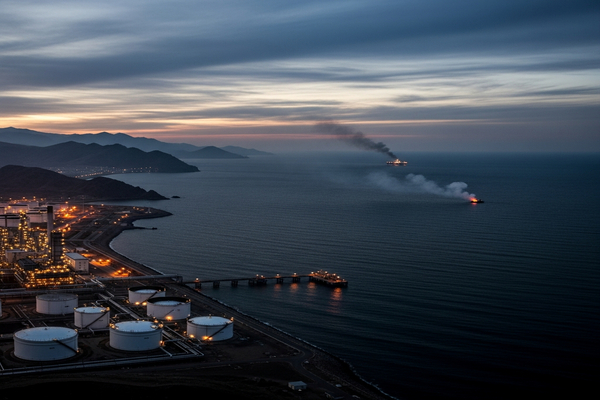
OPEC+ leaves output unchanged for Q1 2026 while Ukrainian drone strikes damage Novorossiysk and Caspian Pipeline Consortium links, cutting more than 1% of global supply and sending oil prices higher. The decision matters now because it combines an immediate supply shock with policy caution. In the short run, markets face tighter seaborne availability and higher volatility. Over the long run, the pause exposes growing uncertainty about demand and potential oversupply once damaged export routes recover. The story has global reach. The US and Europe feel tighter crude markets and higher fuel bills. Asia and emerging markets face price volatility on top of weaker supply routes. Compared with earlier OPEC+ output freezes that followed demand shocks, this one comes at a time of rising regional security risks and a partial revival of European drilling.
Black Sea strikes break key export links
Damage at Novorossiysk and hit tankers cut Caspian seaborne flows and raise short-term price pressure
Over the weekend, naval drone attacks struck facilities and vessels in the Black Sea near Novorossiysk. One hit damaged a mooring at the Caspian Pipeline Consortium terminal. Analysts say CPC shipments have been halved. That terminal normally handles more than 1 percent of world oil flows. Halving its output removes a meaningful volume from seaborne markets overnight.
Images showed burning tankers and thick smoke. Ukraine released video that showed drones heading for those tankers as they moved to load oil for foreign buyers. The strikes come after months of attacks on refineries and energy infrastructure. They point to a possible strategy that targets revenue streams that support Russia.
For exporters in Kazakhstan the effect is acute. Most CPC volumes originate from fields owned by large Western companies. Those producers have few alternative routes to global markets. In response, Kazakhstan publicly urged Ukraine to stop strikes on CPC facilities. That appeal underscores how a regional conflict can force producers and governments into sudden logistical and political decisions.
OPEC+ decision reflects market caution
Leave output unchanged while assessing demand, supply and geopolitical shocks
At the same meeting, OPEC+ agreed to keep production levels steady for the first quarter of 2026. The move signals caution. Delegates said they saw signs of a looming oversupply, even while recent attacks tightened physical flows. The pause avoids immediate policy escalation. It also leaves room to respond if prices spike further or if damaged export capacity recovers slowly.
Historically, OPEC+ has used output cuts to support prices during demand weakness. This time the group chose stability. That choice matters now because traders must price both a real physical disruption and a policy stance that may not add volumes to the market. The result is higher volatility. Markets now weigh shorter term supply shocks from the Black Sea against a baseline of increasing spare capacity as non-OPEC producers ramp up.
Europe loosens drilling resistance
Governments shift policy to revive domestic oil and gas as import costs rise
At the same time, governments in Greece, Italy and Britain are easing earlier opposition to new drilling. The change follows the 2022 energy price shock and reflects a desire to cut reliance on expensive imports including liquefied natural gas from the United States. The European Union still depends on imports for roughly 85 percent of its gas consumption. Domestic production once met roughly half of demand in the 1990s. Restarting exploration does not replace renewables, but it does provide a near term path to reduce import exposure.
In November, Greece issued its first offshore oil and gas exploration licence in more than forty years. A consortium that includes Exxon Mobil (NYSE:XOM), Energean (LSE:ENOG) and Helleniq Energy won the rights. That licensing move shows how priorities have shifted. In the short run, new drilling prospects can reassure markets about future supply. In the long run, governments must balance carbon goals with energy security and cost control.
Corporate and policy ripple effects
Manager changes, job cuts and government finance shifts add to market signals
Energy firms and governments are reacting to both the security shock and the policy pivot. Harbour Energy (LSE:HBR), a North Sea focused producer, said it expected to cut one hundred offshore positions in a UK reorganisation. That followed a budget that kept tough tax terms for oil and gas producers. The British government also ended export credit support for the TotalEnergies (EPA:TTE) led Mozambique LNG project. That move could slow investment in major projects that had been expected to expand long term gas supplies.
Trading houses are repositioning too. Gunvor’s chief executive will step down and sell his stake after scrutiny over past links. Other operators are adjusting cargo flows and insurance arrangements because attacks on tankers raise shipping and security costs. BP (LSE:BP) resumed full operations at its Olympic Pipeline after a leak in Washington. The string of corporate moves underscores how firms respond to both immediate operational risks and shifting national policy priorities.
What traders and policy makers should watch next
Monitoring repairs, pipeline throughput and OPEC+ signals will shape market direction
In the near term, attention will focus on the pace of repairs at Novorossiysk and the return of CPC throughput. If shipments stay reduced, seaborne crude availability will remain tight. That increases the chance of price spikes tied to physical shortages. Meanwhile, watch OPEC+ communications for any sign of coordinated output changes. The group left room to act, but has signalled concern about an oversupply once demand softens.
On the demand side, Europe is balancing new drilling approvals with emissions targets. Any acceleration of domestic production could ease import pressure over several years. For Asia and emerging markets, higher volatility increases import cost risk and the need for flexible supply contracts.
This combination of a real supply disruption, a cautious OPEC+ stance, and policy shifts in Europe creates a market environment where price swings may become larger but less predictable. Traders and policy makers will need to follow repair timelines, export route alternatives and government decisions on taxes and export backing to assess how quickly the market returns to balance.
Sources in the market reported that energy analysts are revising near term flows and that shippers are re-routing cargoes to avoid vulnerable choke points. Those shifts will affect insurance and freight costs. They will also influence which producers can sustain steady exports and which will face higher lifting and logistics expenses. The immediate result has been a rise in crude prices and heightened market alertness. Over time, the combined effect of security risks and policy responses will determine whether higher prices persist or fade as new supply options and demand signals emerge.